
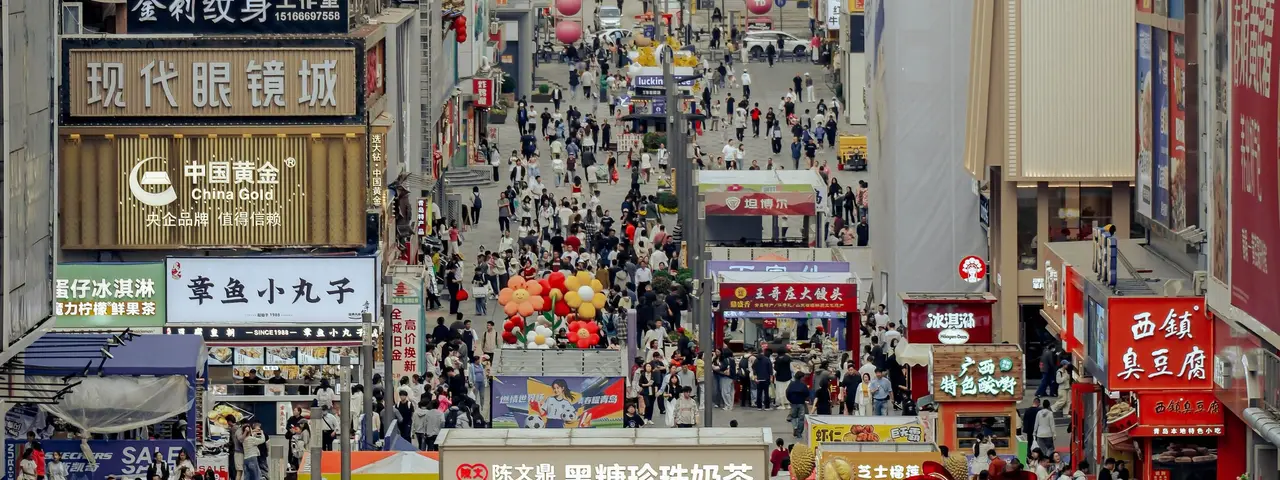
China is not just the factory of the world. With 1.4 billion people, it is also one of the largest markets for consumer goods and industrial equipment. It is a fiercely competitive market, where local brands move fast and business practices differ from those in Europe.
What has changed
- Since the Foreign Investment Law came into force in 2020, foreign-invested companies have been governed by China’s general company law. The old specific regimes (WFOE, joint venture) no longer exist as such.
- E-commerce dominates consumer sales: Tmall and JD.com, but also Douyin, Xiaohongshu and WeChat.
- Cross-border e-commerce lets you test the market without a company in China.
- Your trademark must be protected before you enter the market: China applies a first-to-file rule.
Our approach
We start by checking that your product has a place: local competition, price levels, regulations (CCC certification for some products, Chinese-language labelling) and suitable channels. Then come the choice of a distributor, partner or local presence, and the formalities. A reliable local partner matters as much as the quality of the product.
Setting up in China
Representative office, foreign-invested company, Hong Kong company or contract manufacturing: how to choose and set up your presence in China.
Learn more →Selling your products in China
Trademark registration, CCC certification, Tmall, JD.com, Douyin, distributors: how to bring your products to the Chinese market with a local partner.
Learn more →Technology and market monitoring
We monitor Chinese patents, competitors, prices, suppliers and regulations, using Chinese-language sources, and send short reports with suggested actions.
Learn more →Translation
Specifications, contracts, user manuals, labels and websites translated between Chinese, French and English, plus language support during factory visits.
Learn more →